
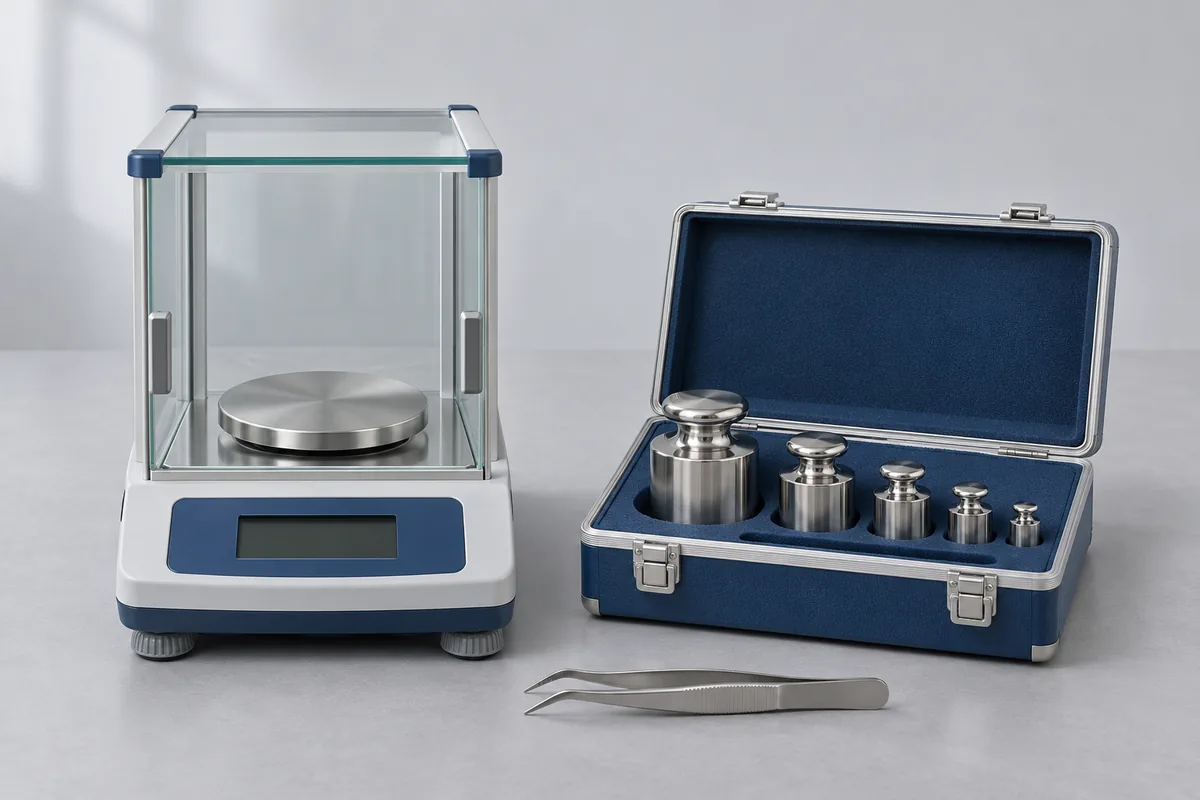
What changed on the bench?
Note any recent overload, spill, relocation or power supply replacement. List the model, readability and the load at which the problem was observed. If an external display or adaptor belongs to this balance, include its identification rather than substituting a similar part.
Decide what the repair estimate covers
Tell RTS whether the unit is a laboratory balance or a bench scale and who can approve parts. Assessment may point to installation, repair or replacement. If the balance will release production samples again, specify the loads and records needed after the work.
A fault that follows the location
A balance might appear steady before a shift and drift once a nearby machine starts. Note what was happening around the balance when the symptom first appeared, which pan or vessel was fitted and how long the instrument had been in place. If a comparison weight was used, include its ID, the displayed reading and the elapsed time already recorded by the operator.
Tell RTS whether the instrument can be moved without losing the setup where the fault occurs. A video already taken at the bench may preserve a symptom that cannot be reproduced after transport.
Moving it from a sample room
Record which pan, draft shield and adaptor belong to the sample-room balance. Agree on the manufacturer's transport arrangements before the unit leaves its normal bench.