
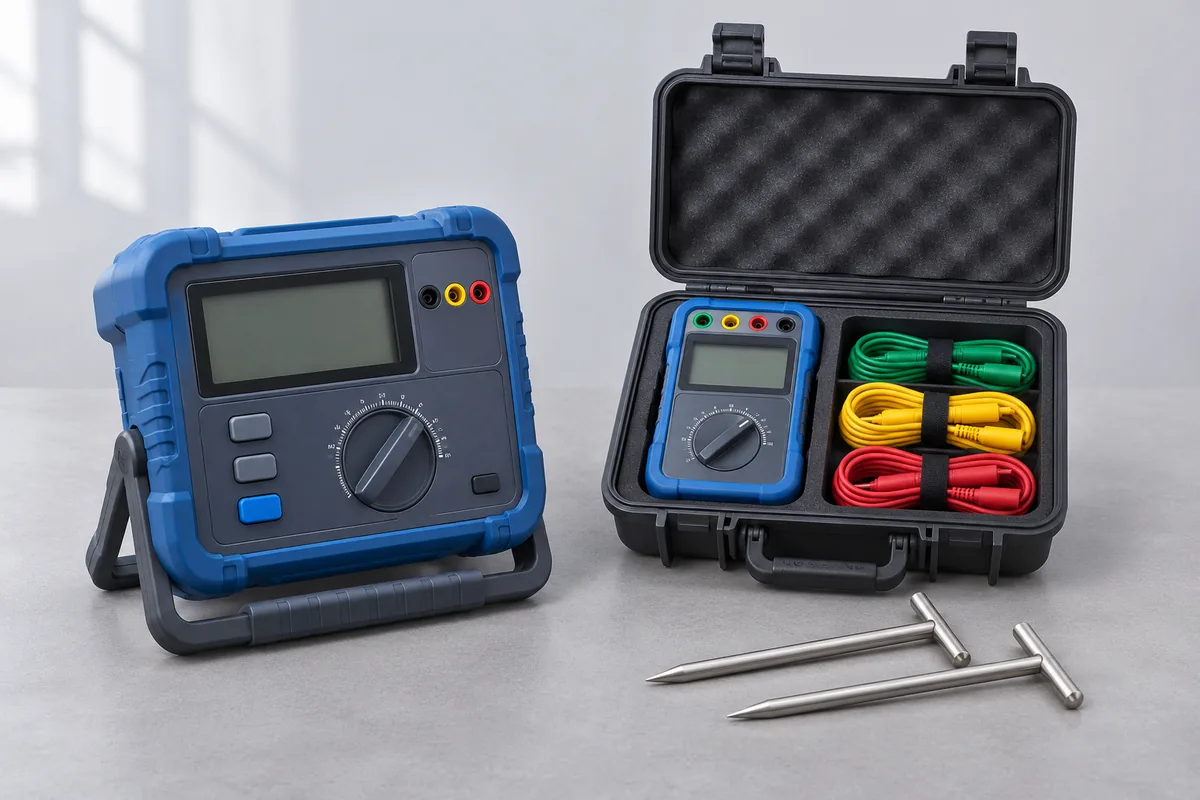
Keep the selected voltage with the symptom
State the selected test voltage, displayed resistance and any error message from the last use. Say whether the problem affects every setting or one range, and whether it started after storage, a drop, moisture exposure or a known connection incident. If a timed test was running, identify the mode and stage at which it stopped. A screen photograph already taken by the operator is often useful.
Identify leads, guard accessories and charging equipment
List the supplied leads and their ratings or part numbers, including a guard lead where fitted. Mention cracked insulation, damaged clips or a connector that no longer locks. Include the charger identity for a charging fault and describe the battery indication seen before shutdown. Agree the packing and battery arrangements before dispatch; do not send an unlisted substitute lead simply because it fits the socket.
Ask for an itemised assessment
Give one person authority to review the estimate. Ask which parts are available, what work is proposed and whether a manufacturer service route is needed for that model. Request that any conditions preventing a safe or complete assessment are recorded. For a combined insulation tester and multimeter, specify the separate meter functions that also need attention instead of assuming they are included in the insulation fault.
Agree electrical checks and calibration separately
A return-to-service plan should identify the required safety and functional checks as well as the calibration results. Include output-voltage and resistance requirements, and any discharge or indication checks specified by the manufacturer. The CC-4643 resistance entries have their own methods and ranges; they do not establish coverage of every test voltage or insulation function. RTS should confirm the accepted points and reporting scope before you authorise the complete job.
Plan the maintenance handover
Include the next shutdown date if the tester is needed for planned maintenance. A unit at IMT Bawal should have its kit number, releasing department and return contact on the dispatch note. For shared equipment moving between Indian plants, identify the site that will accept the repaired kit and its records.