
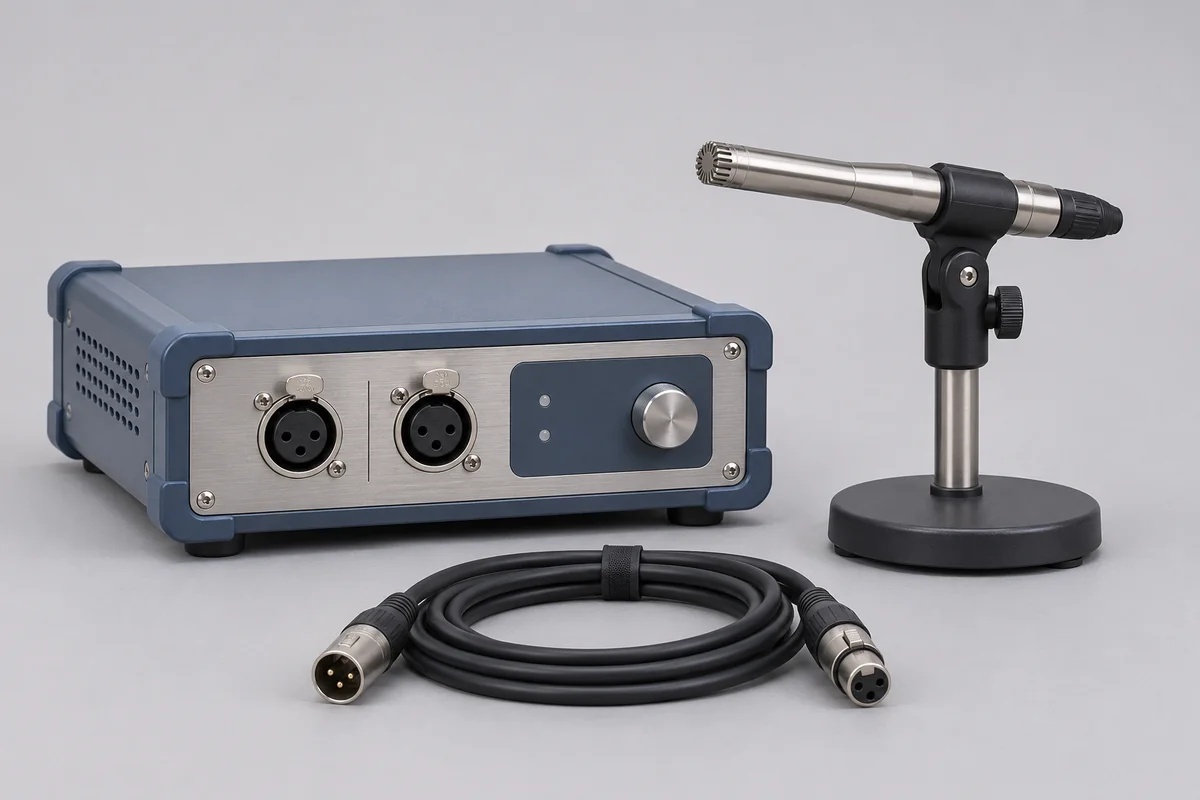
Audio analyzers and their signal paths
An audio analyzer may contain both a generator and measurement inputs. Identify the channels and analog or digital interfaces used, along with level units, frequency points and termination settings. Give distortion, noise or frequency-response requirements separately from amplitude checks. RTS should review the applicable reference methods before accepting the instrument; a basic AC voltage comparison does not establish all of its audio analysis functions.
Keep source and analyzer functions separate
If the instrument generates the signal used by a production test, list that source function as well as the measurement input. A comparison of the generator output does not establish the analyzer input, or the reverse. Give the channels and connectors used for each task. A shared bench may use only some combinations, so identify the ones that actually control product acceptance.
State the result and the bandwidth
A noise or distortion figure depends on how the signal is measured and reported. Include the selected bandwidth, weighting or filter settings, detector convention and units from your test procedure. If the report uses a ratio, identify its reference. RTS can review the requested measurement against a suitable method without treating a single amplitude result as evidence for every displayed analysis value.
Identify digital interfaces and saved configurations
For digital work, include the interface, sample-rate settings and the channel mapping used by the bench. Retain the configuration file or a readable settings list with confidential device information removed. A fixture or format change may alter the test sequence even when the analyzer serial number stays the same. Mark the configuration that should be associated with the requested calibration or verification evidence.
Use the previous report to define a repeat
Send earlier results when you need the same frequency and level combinations repeated. Explain changed options, firmware or adapters. Provide the acceptance limits used by your quality procedure and say which results need a conformity decision. RTS must confirm the method and available specialist service before acceptance; ordinary 50 Hz electrical entries do not establish a complete audio-band or distortion-measurement capability.
Return the analyzer with a clear bench record
Give the bench owner, required date and the person who will review the results. Keep cables, termination accessories and channel labels on the packing list. The returned record should identify the functions checked and the configuration used, so the engineer can decide how the evidence applies to the production program before that program resumes controlled testing.