
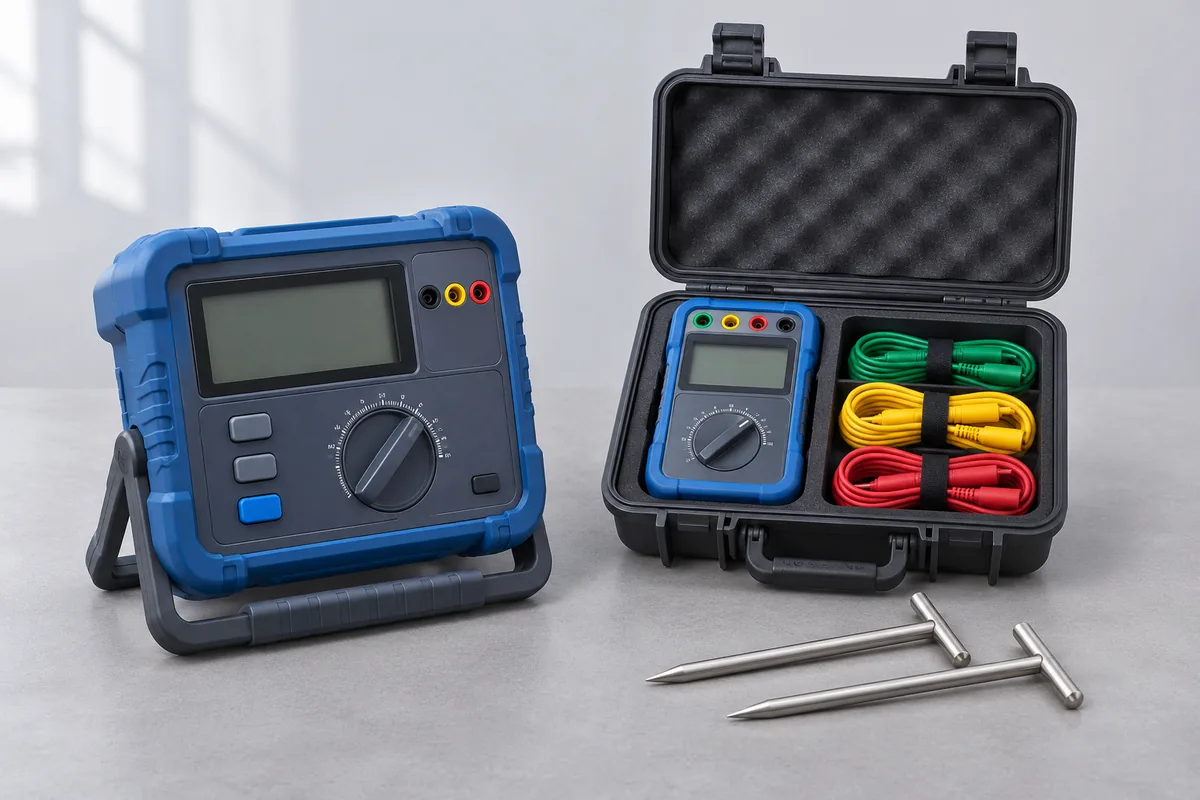
Show the terminals or clamp head
Include a front-panel photo showing the available test modes. Describe the terminal arrangement for a stake-based tester, or identify the clamp head for a clamp-on model. If there are detachable clamps or a reference loop supplied with the unit, give their part numbers.
Specify the readings required
List the resistance values and units you want reported. Identify any separate continuity or soil resistivity function on the paperwork if it also needs attention. An intermittent lead or a jaw that does not close fully belongs in the condition notes.
The complete instrument arrangement
A kit may provide terminal-based measurements and a clamp mode with different accessories. Mark each mode your records rely on and identify the clamp or interface that belongs with it. If your procedure specifies a test frequency or another selectable setting, copy that setting into the enquiry. A list of resistance points alone may leave the arrangement unclear.
For an instrument that also displays leakage current, request that function separately. Include the previous certificate if you need the same points repeated and flag any change in accessories since that work. The returned result should identify the configuration that was compared. It does not establish the resistance of an electrode at your site; a site measurement needs its own location, access and measurement plan.
Booking a facilities team’s test kit
List the numbered leads, clamps and reference loop that will travel with the tester. Give the maintenance contact who can confirm the case contents on return. If part of the kit must remain on site, discuss that before dispatch.