
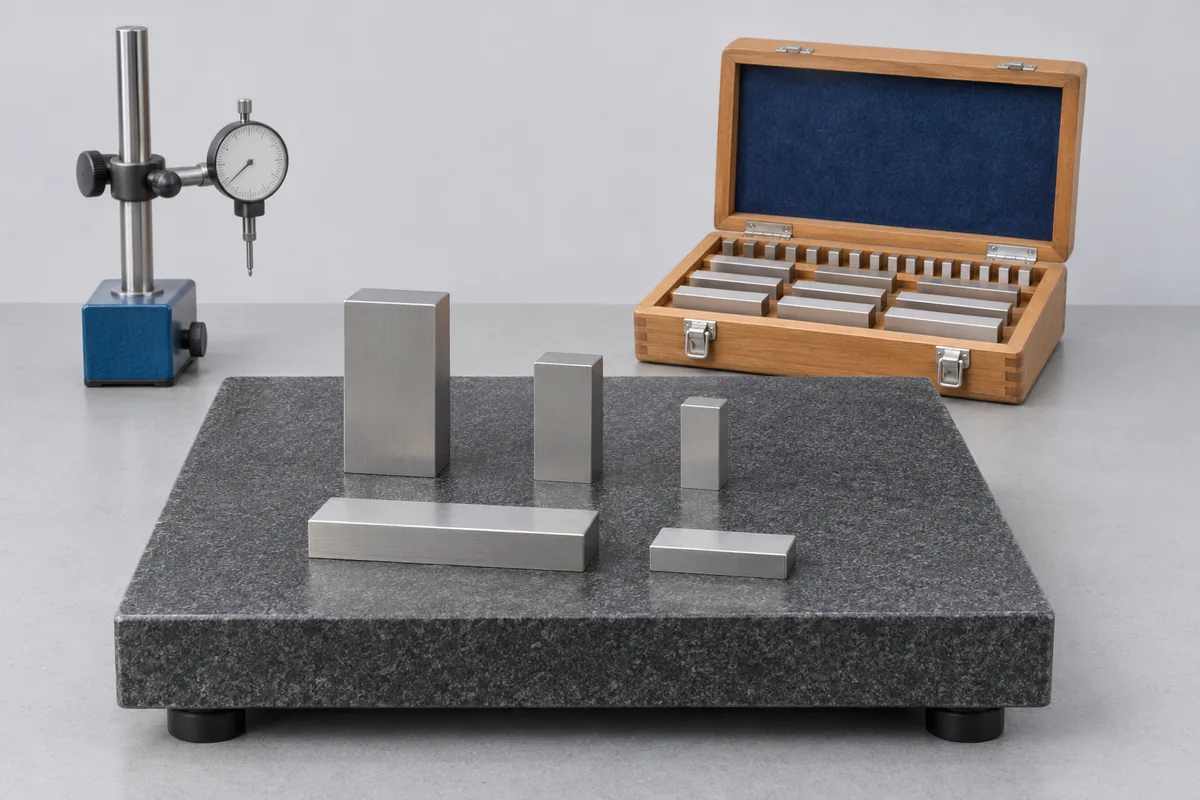
Reconcile the set before packing
Send the nominal length and identifier of each block, whether the set is metric or inch, and the grade shown on its paperwork. Identify the material and any replacement or wear blocks. Note chips, staining or damaged measuring faces so their condition can be considered during review.
Specify which result you need
An inspection sheet may require the deviation of central length from nominal. A grade assessment may call for additional results such as variation in length across the measuring faces. Send the requirement with your list so RTS can confirm available measurements, the reporting laboratory and the quotation for that set.
Use the values for the blocks actually stacked
When several blocks are assembled to establish a working length, the identification of each member matters. If the toolroom applies corrections from the certificate, keep the measured length and its sign with that block's nominal size. Mark any duplicate nominal lengths on the enquiry so their results remain distinguishable after the set returns.
The grade printed on the case may describe the original set. A replacement block or damaged face deserves individual review. Send the previous report and ask which length characteristics are included before requesting a grade statement. Temperature conditions also belong with a precision length result; a certificate value needs to be understood within the measurement conditions it records. Tell RTS whether you require individual results, a selected subset or assessment of the complete inventory, and keep any request for cleaning or remedial work separate from calibration.
Keep tool setting available
Identify the lengths needed for routine tool setting and the blocks that can leave together. Agree the packing and receiving details before releasing the case. Reconcile each slot against the dispatch list, including empty positions, and retain a copy for the person accepting the returned set.
Gauge block comparator assessment
For a gauge block comparator, identify both sensing contacts, the readout and the arrangement used to compare a block with a reference. Supply the required measuring interval, force information from the manual and the previous performance record. Reference blocks used for the assessment need their own assigned values. The comparator's measurement performance is a separate enquiry from calibration of the blocks routinely checked on it.