
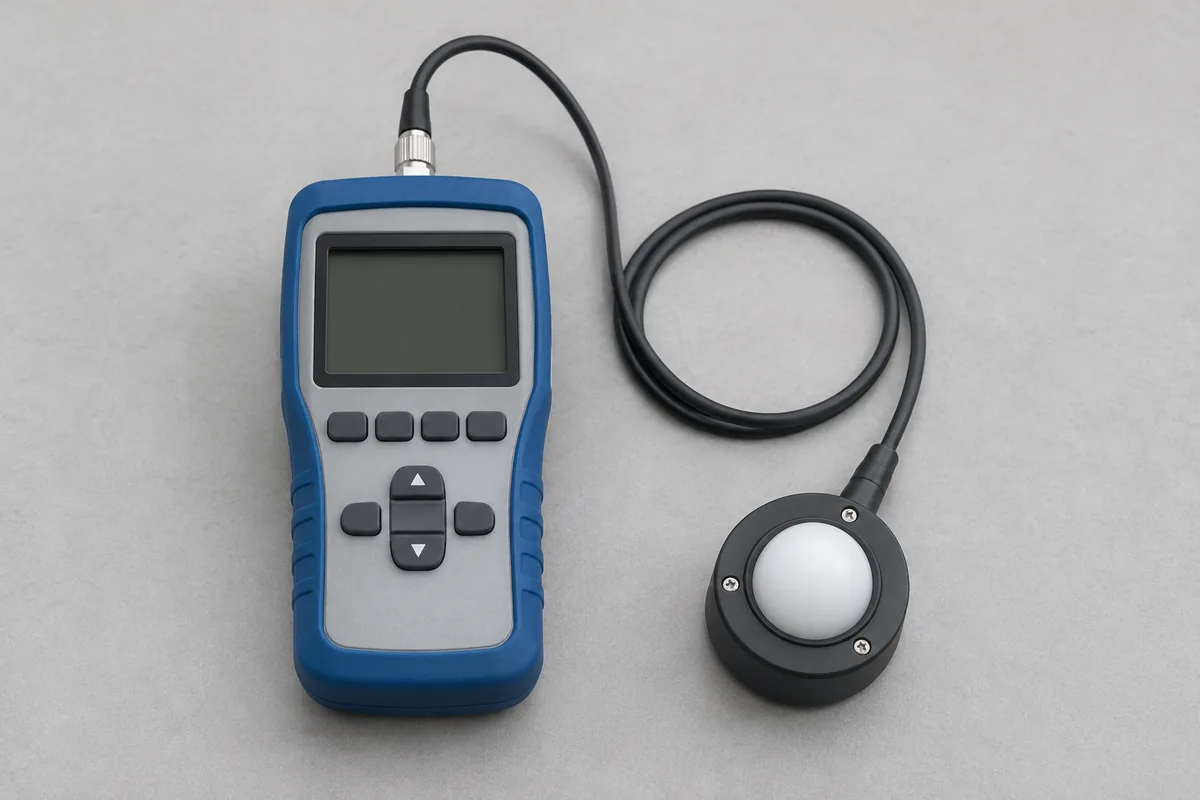
Keep the sensor with its meter
Tell us whether the light sensor is built in or connected by a lead. Record the sensor ID if it is detachable, the meter range and the units you use, such as lux or foot-candles. Report damage or discolouration of the diffuser so its condition can be assessed.
Describe the lighting requirement
Identify the light source when your procedure specifies one. An inspector measuring an LED-lit workbench may have a different reporting requirement from a team making general workplace checks. Send the relevant part of the procedure if it specifies a reference source or test levels.
Source, sensor and displayed unit
A lux reading describes illuminance at the sensor. It does not by itself report the colour temperature or colour rendering of a lamp. If an inspection specification includes those quantities, identify the other instrument used so the quotation does not treat a lux meter as a complete lighting test system.
For a detached sensor, note whether it has been replaced since the previous certificate. A scratch or discoloured diffuser should be recorded before packing, because the receiving condition matters when comparing results over time. Send the light levels used for decisions and the permitted error from your procedure. Where the procedure names a particular source, include its details and ask RTS to confirm the reference conditions and the sensor-meter pairing that will appear on the report.
Booking for inspection benches
Use the meter asset number to agree a release date with its custodian. A central quality team can list light meters from several plants with their own return contacts and reporting requirements. Keep the sensor cap and protective case with the instrument.