
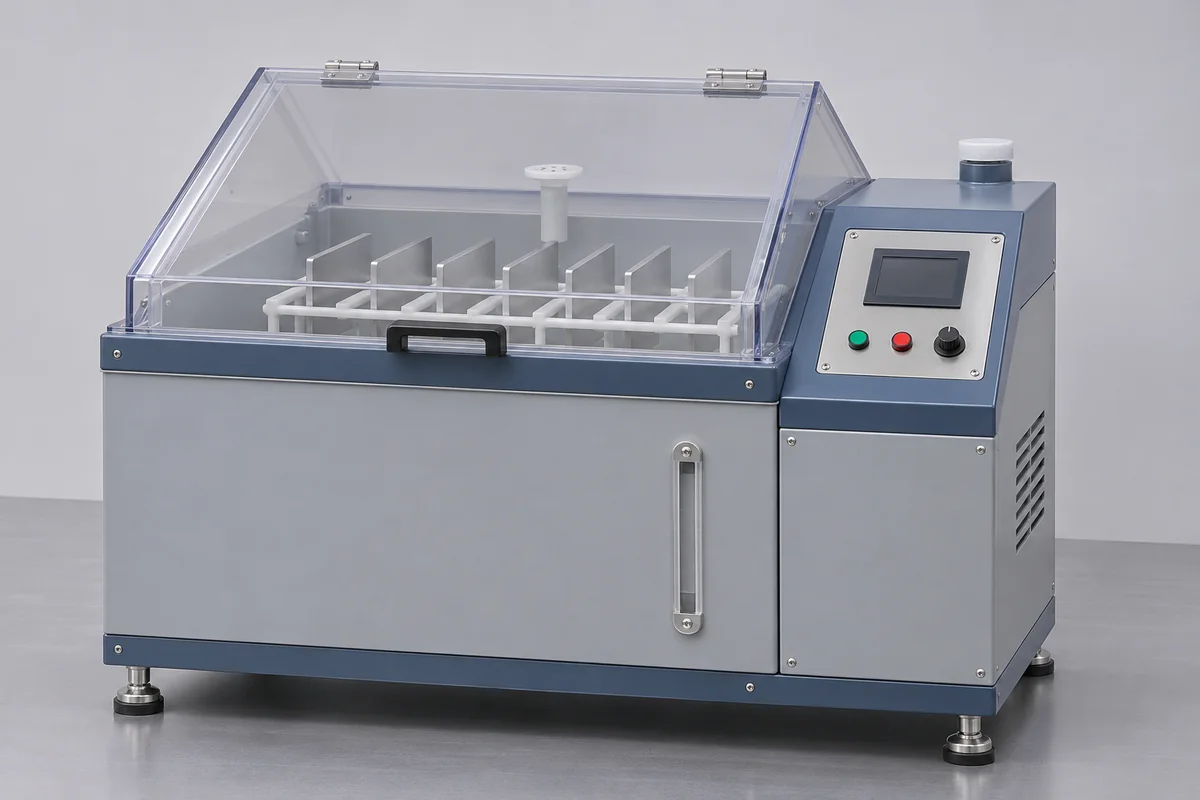
Salt spray chamber measurement requirements
A salt spray chamber enquiry should identify the exposure method, chamber model and measurements required by your laboratory procedure. Temperature indication, air pressure, solution properties and collection observations are distinct records. Provide the working settings and collector arrangement with the request. RTS can review the relevant instrument comparisons and wider assessment separately; a temperature certificate alone does not establish that a corrosion exposure meets the complete test method.
List the instruments and the chamber study separately
Identify the chamber sensor, controller, air-pressure indication and any independent recorder. Give each an asset reference where available. State whether the order concerns these instrument indications, measurements within the chamber or a broader assessment against the exposure procedure. A result at one location should retain that location. It should not be presented as a survey of every position occupied by specimens.
Keep collection observations with their locations
Provide a diagram showing the collector positions used by the laboratory, together with their identification and the observation period. Keep volume readings and elapsed time as separate recorded values. If collection is one of the requested checks, name the method and acceptance source. RTS can review the required apparatus and reporting arrangement without assuming a temperature comparison also verifies spray distribution or collection behaviour.
Record the solution requirement accurately
Give the solution specification and the properties that need measurement, with the instrument identities used by the laboratory. A pH result, concentration preparation record and collected-liquid observation answer different questions. Do not substitute one for another in the enquiry. Include the procedure revision and the person who can explain the laboratory's existing records so the accepted assessment covers the evidence actually needed by the customer.
Agree conditions before the chamber is released
Tell RTS the normal operating schedule, loading arrangement and access available for reference instruments. Identify whether the requested assessment is under an empty or specified loaded condition. Any proposed work needs a method and capability review before acceptance. The published thermal scope is not a blanket claim of compliance with an entire corrosion-exposure method, and a chamber assessment does not assign corrosion performance to a product.
Use a report that can be repeated
Keep measurement locations, operating settings, instrument identities and the procedure revision together in the final record. Highlight the results that your laboratory wants repeated during its next assessment. Give one person responsibility for reviewing any exceptions before specimens are tested. For work at another plant, retain that site's chamber identity and conditions rather than reusing an assessment from a similar-looking unit elsewhere.