
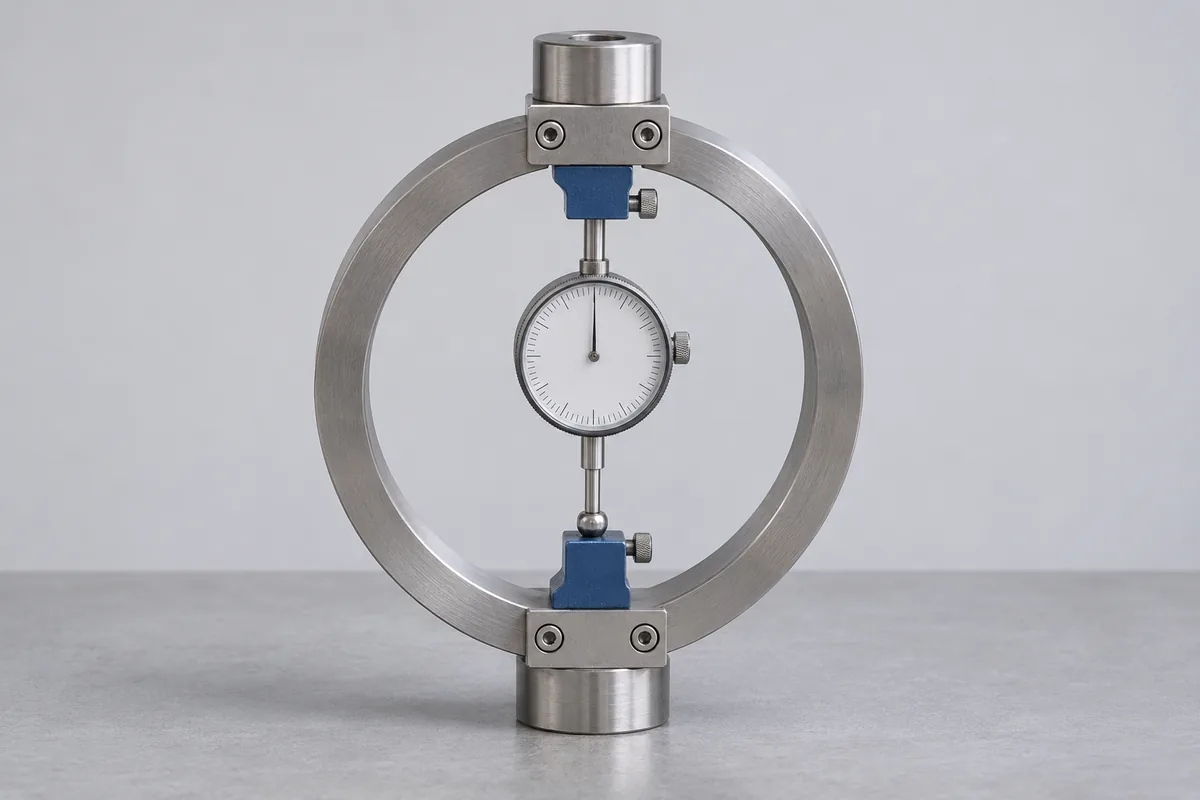
Identify the loading arrangement
Copy the rated force and state whether the ring works in compression or tension. Photograph the loading ends and identify the adapters supplied with it. If an adapter normally stays on a testing machine, give its dimensions or drawing so the complete request can be reviewed before transport.
A testing department may own rings of different capacities that use similar-looking indicators. Keep the specific pair together on the packing list. Tell us if the indicator was replaced, or if the ring has been overloaded or repaired since its last report.
What should the report contain?
Send the force points and loading sequence required by your procedure. State whether readings on decreasing load are needed and how the user converts the indication into force. If a table or fitted relationship is required, request it explicitly rather than assuming it comes with a list of readings.
The machine capacity and the ring capacity can differ. Identify the portion used for routine tests and provide the acceptance criterion your quality team applies to the proving instrument. RTS can review the requested range, method and uncertainty before confirming the work.
Keep the assembly protected
Agree whether the indicator travels installed or separately in its case, following the instrument's handling instructions. Protect the contact and loading faces and list all attachments. Add the receiving engineer to the return instruction so the complete set reaches the test bench, including the conversion record used with that particular ring.