
Anechoic chambers and the measurement system
An anechoic chamber enquiry must identify the frequency range, test geometry and measurement you want assessed. Chamber performance, antenna behaviour and the instruments used inside it are different parts of the system. Provide the existing site-validation report and describe changes to absorbers, positioners or cabling. RTS can review the requirement and appropriate service route; instrument calibration by itself does not establish chamber performance.
Antennas used as receiving references
An antenna used for measurement needs its model, serial number, connector and required frequency points identified. State whether you need antenna factor, gain, impedance or another result, with orientation and geometry defined. Keep the original calibration data with the antenna, including any matching unit. This is a specialist reference enquiry; a receiver calibration does not assign a new antenna factor or establish the performance of its complete installation.
Antenna analyzers
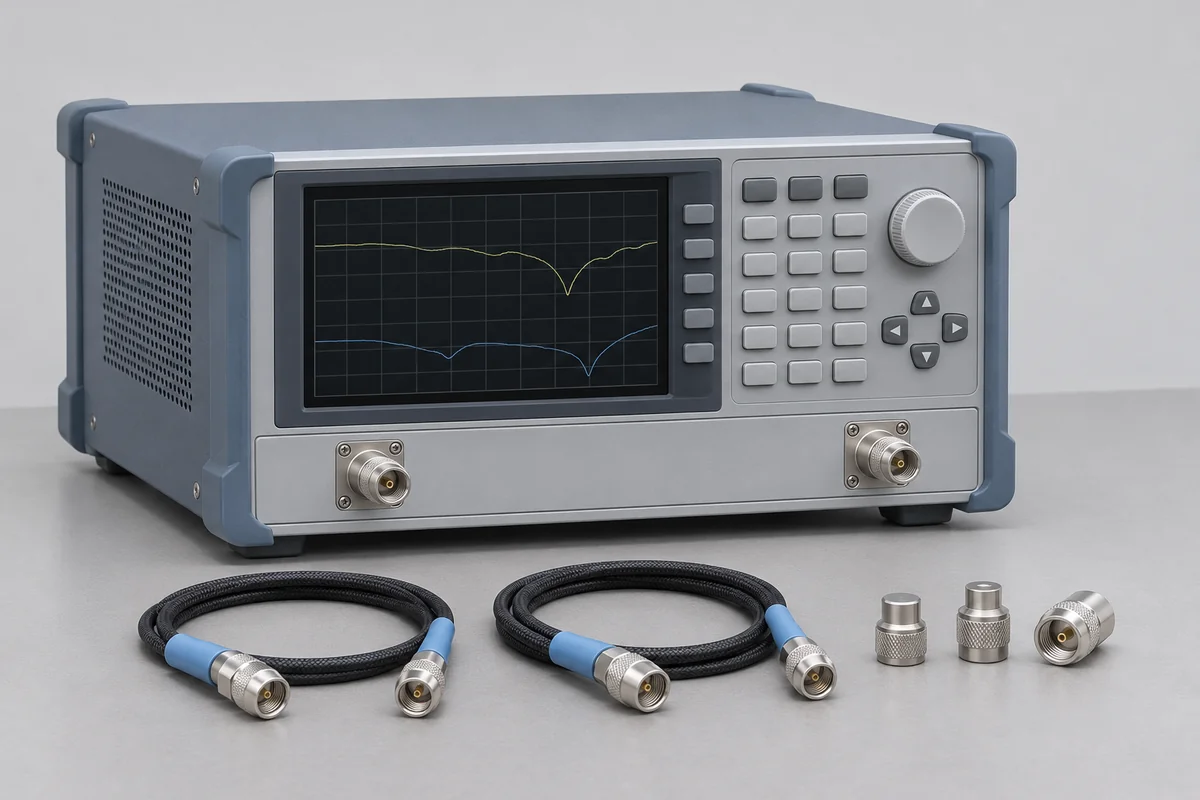
For an antenna analyzer, record the frequency bands, port, connector and required impedance or reflection result. Include the calibration kit and adapters used to establish the working connection. A cable-and-antenna measurement involves a defined reference plane, so show where that plane is expected to be. RTS needs the instrument options and reference method for review before confirming which analyzer functions can be assessed.
Antenna test systems
An antenna test system may combine a source, receiver, positioner, cables and control software. Send the equipment diagram with the quantities reported by the final system. Identify which component calibrations already exist and which system checks are still required. Keep position and orientation conventions with the test procedure. RTS can review the proposed work as a defined system enquiry rather than assuming one certificate covers every component and calculated result.
Network analyzers and vector network analyzers
A network analyzer or vector network analyzer enquiry should identify the ports, frequency bands, connectors and scattering parameters required. Include the calibration-kit definition and any test-port cables or fixtures. The working reference plane must be specified because it determines what connection is included in a result. User error correction and independent instrument verification answer different questions; give RTS the required evidence before the method and service route are agreed.
Preserve the measurement boundary
A user calibration that removes cable and fixture effects establishes a working reference plane. It is not a substitute for every instrument-performance check or an antenna-system evaluation. Ask the quotation to identify the object being assessed, the accepted frequency points and the references used. Keep connectors, adapters and stored correction files associated with the same configuration when reviewing the returned evidence.
Arrange specialist equipment as a complete list
Include the instrument options, calibration standards and fixtures that are available, but agree what needs to travel before sending them. For installed antenna or chamber work, provide the layout and responsible technical contact. RTS will confirm the appropriate service route and accepted tasks before any schedule is committed.