
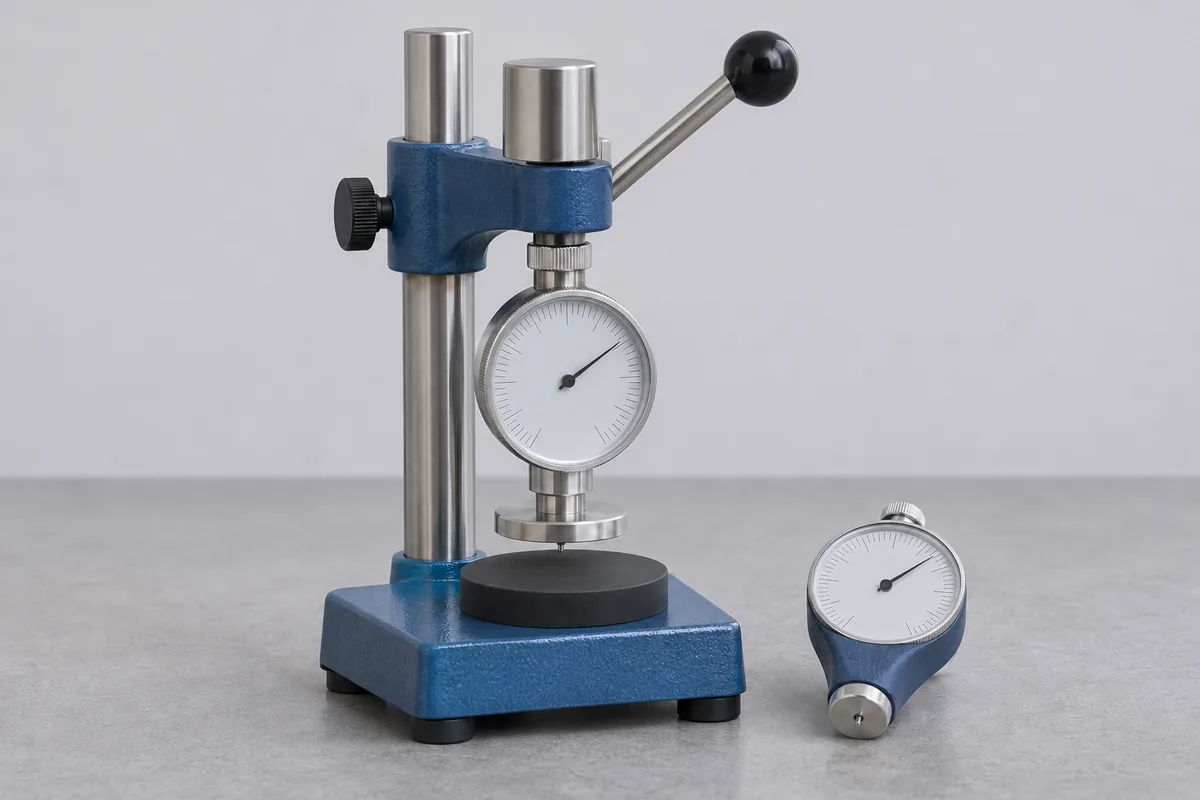
Identify the durometer and its stand
State whether the instrument is used by hand or on a stand, and list the stand separately if it forms part of the requested assessment. Include the presser-foot arrangement, the display type and any dwell or peak-reading function used by the operator. Describe a damaged tip, uneven foot or stiff movement before arranging shipment.
For a laboratory with several hardness scales, group instruments by scale while retaining each serial number. Supply the standard or internal procedure that defines the required checks. RTS can review the geometry, force and indication requirements for that instrument before confirming the work; a general request for rubber hardness leaves too much of that scope open.
Understand the role of checking blocks
A check on a supplied block is useful for following the behaviour of an instrument under consistent conditions. Full instrument calibration may require separate consideration of the indenter, displacement indication and spring force. State the required deliverable so a simple comparison reading is not mistaken for assessment of every characteristic.
If your team uses elastomer checking blocks, give their identification, age and available documentation. Keep the storage and test conditions with the routine readings. Material samples can change, and their reading also depends on the test arrangement. Ask whether the blocks should travel with the instrument and whether any separate assessment is proposed. A production sample's hardness result belongs to the material test procedure, including its specified preparation and reading time.
Retain the received condition
Include the last calibration report and explain any disagreement between operators or instruments. Request initial results before adjustment if they are needed for an investigation. Protect the projecting indenter in its proper case and keep stand accessories labelled. Give the return department and the working date for which the instrument is needed when asking RTS to review the request.