
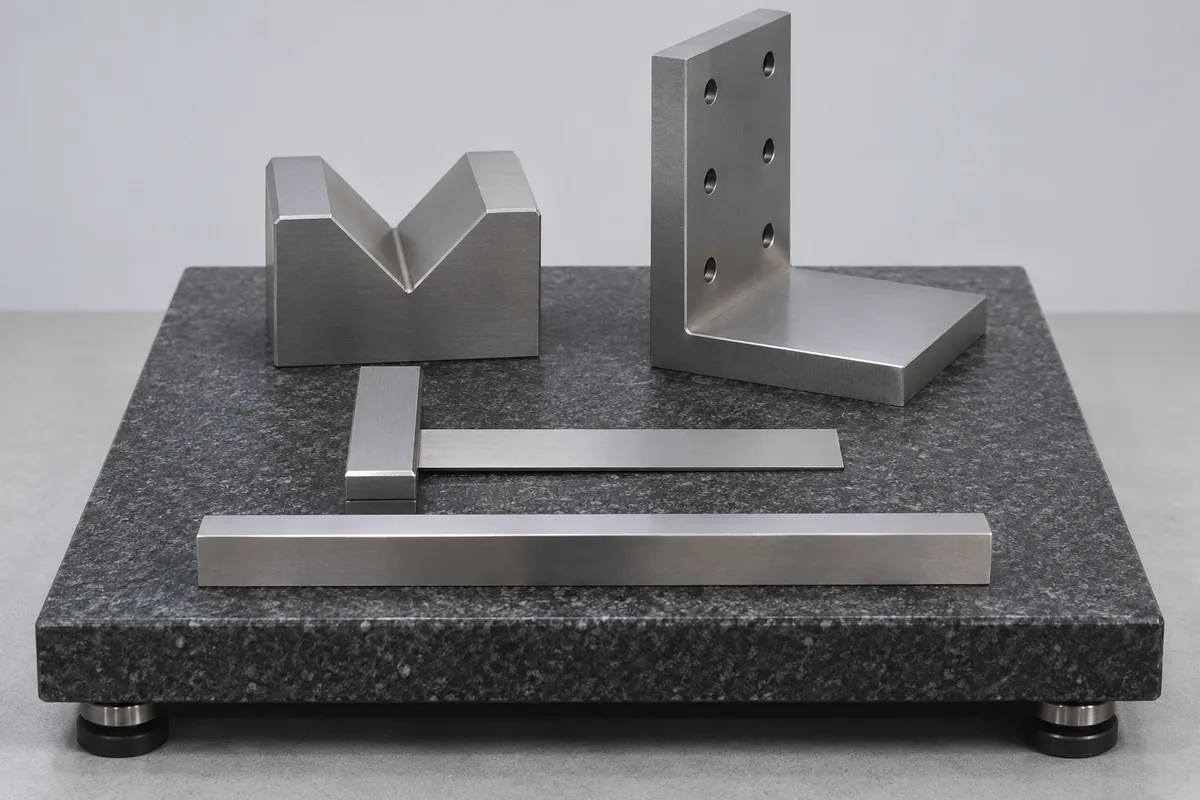
Identify the edge, face and length
Give the material, overall length, cross-section and any grade marked on the instrument. Say whether it is a knife edge, a rectangular section or a larger bridge or camel-back form. Photograph the working face and mark its ends so the report can identify the measured portion.
If both faces or several edges are used, list them individually. Include the length over which the acceptance limit applies. A local check over a short section and a straightness assessment over the complete usable length should be distinguishable on the quotation. Send the specification or drawing reference that defines the requirement.
Preserve the support conditions
Describe the orientation in which the straight edge is used and any marked support points. For a long reference, its own weight and the way it is supported can affect the shape presented to the measurement. Include the manufacturer's support instructions where available instead of choosing convenient positions during packing or setup.
Record any suspected bend, damaged corner or recent resurfacing. If the instrument has been checked previously, supply the report with its face identification and support arrangement. RTS can then review a repeatable comparison and the conditions to be recorded. A change in support or orientation needs to remain visible when your quality team compares the new results with the old ones.
Transport without loading the working surface
Provide the length and weight before dispatch. Use the fitted case or an agreed support arrangement, keeping clamps and other tools away from the reference face. Identify who can receive and inspect it on return. For an installed or particularly large reference, ask RTS to review site access before planning removal.