
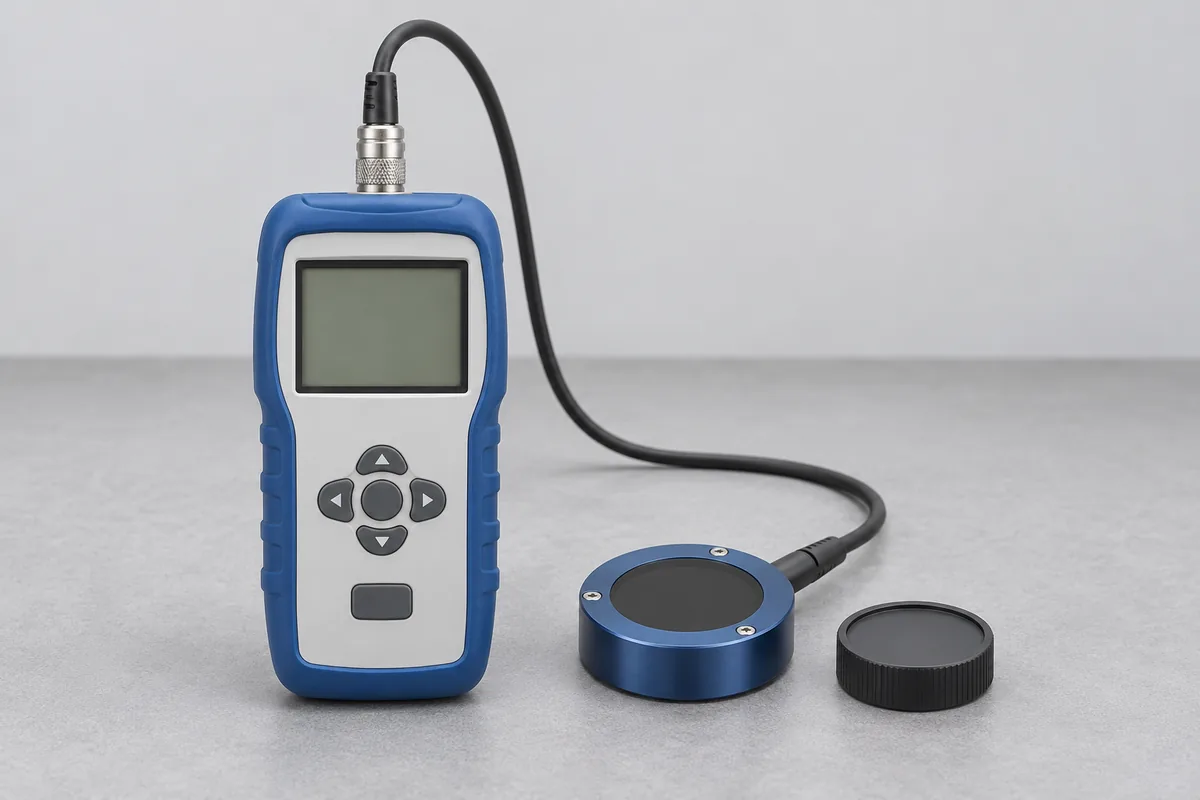
Identify the detector and source together
Copy the detector's marked wavelength band or designated response and the source type named in your process instruction. Include any stated peak wavelength or source specification available from the equipment record. Do not substitute a guessed wavelength where the instrument or lamp documentation is unclear; send those documents for review.
A radiometer's response across wavelength affects how it reads different sources. Ask RTS to review the relevant reference conditions before comparing quotations. A calibration made for one source arrangement should not be assumed to establish the same uncertainty for every UV lamp or LED.
Irradiance and accumulated exposure are different entries
State the displayed quantity and unit used by your process record. If the instrument integrates a reading over time, identify whether the request covers that accumulated result as well as the instantaneous reading. Give the working levels and any measurement duration specified by the approved procedure.
List each sensor head, filter, light guide or adapter that belongs to the meter. Include a previous certificate and identify any component changed since then. RTS can review the model and required measurements before accepting the work. The instrument comparison is separate from assessing whether the plant's curing process achieves its intended result.
Record the condition before dispatch
Report contamination, a scratched window or heat damage using existing observations and photographs. Follow the manufacturer's packing and handling instructions for the detector. Agree which source information should accompany the unit and who will receive the sensor and report after the work.