
Describe the measuring arrangement
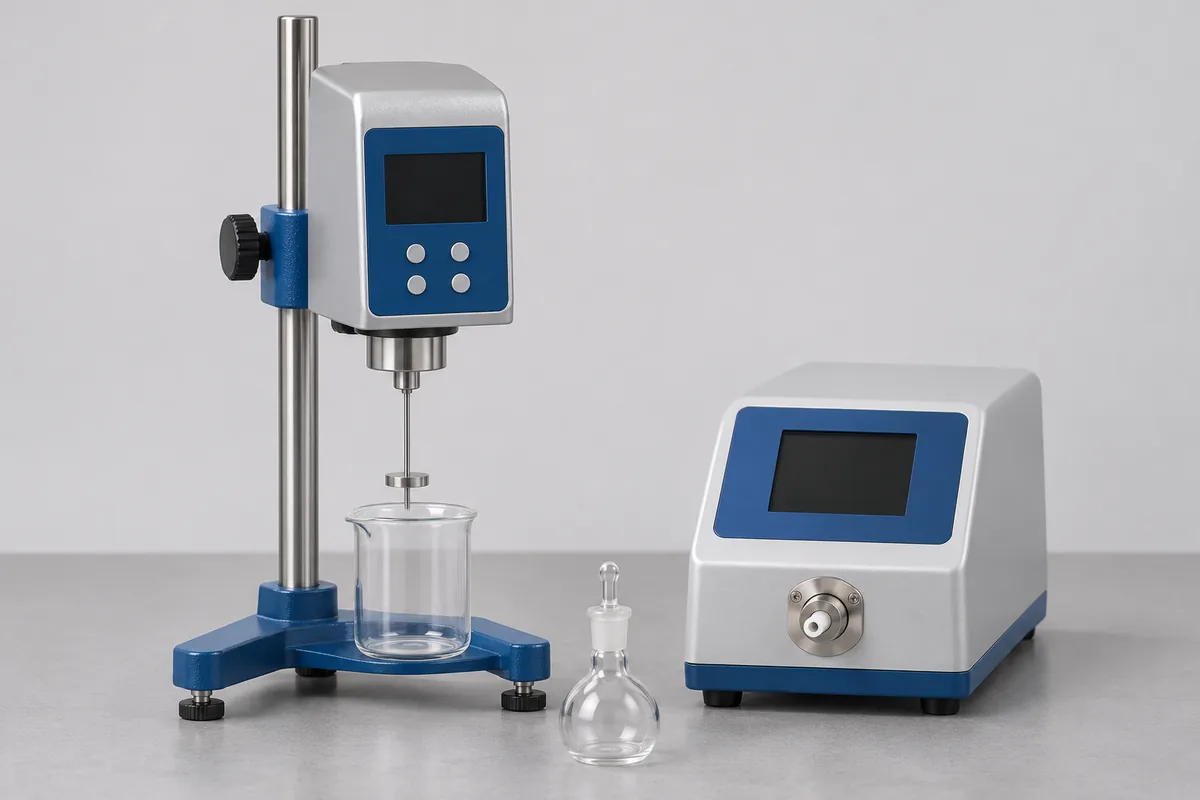
For a rotational viscometer, identify the model, spindle or measuring geometry, speed and sample container used by the method. Include the temperature and viscosity interval of interest. If a spindle has its own identifier, retain that number with the main instrument rather than referring only to a shared spindle set.
For a capillary viscometer, provide its designation, serial number and existing constant or certificate. For an efflux cup, identify the cup type, orifice and specified timing method. These details let RTS review the actual comparison instead of assuming that all viscosity equipment produces the same quantity.
Agree the quantity and temperature
State whether the required result is dynamic viscosity, kinematic viscosity, an instrument constant or an efflux time. Copy the units and acceptance limits from the procedure. A value at one temperature should not be used as though it applied at another; include the temperature-control arrangement used for the measurement.
Send the details of any certified reference fluid used for routine checks, including its assigned temperature and value. Describe a recent disagreement with the reference without adjusting the instrument simply to make the reading match. Agree whether initial results and any subsequent adjustment are required.
Prepare the instrument list for review
Report a damaged spindle, chipped cup or contaminated capillary before dispatch. Follow the maker’s cleaning and handling requirements and confirm which accessories should accompany the instrument. RTS will review the model, method and reference requirement before accepting the work. For several laboratories, put the return department and requested method against each item.
Rheometer and modular compact rheometer configurations
A rheometer, including a modular compact rheometer, needs its measuring geometry, temperature system and selected rotational or oscillatory mode identified. State the torque, angle, gap, temperature or reference-fluid comparison required by the method. These quantities are not interchangeable with one viscosity reading. Send the complete configuration for specialist review, particularly when changing a measuring geometry between laboratory methods.