
List the input behind each channel
Give the input type and configured scale for every channel included in the request. A thermocouple input, an RTD input and a current signal scaled into pressure need different reference arrangements. Include the sensor designation, units and working points. List any channel that has changed configuration since the previous certificate.
If the request covers an attached sensor as well as the recorder, identify both. A simulated electrical input checks the recorder’s response; it does not establish the performance of the field sensor. State where the requested measurement begins and ends.
Specify the record to be compared
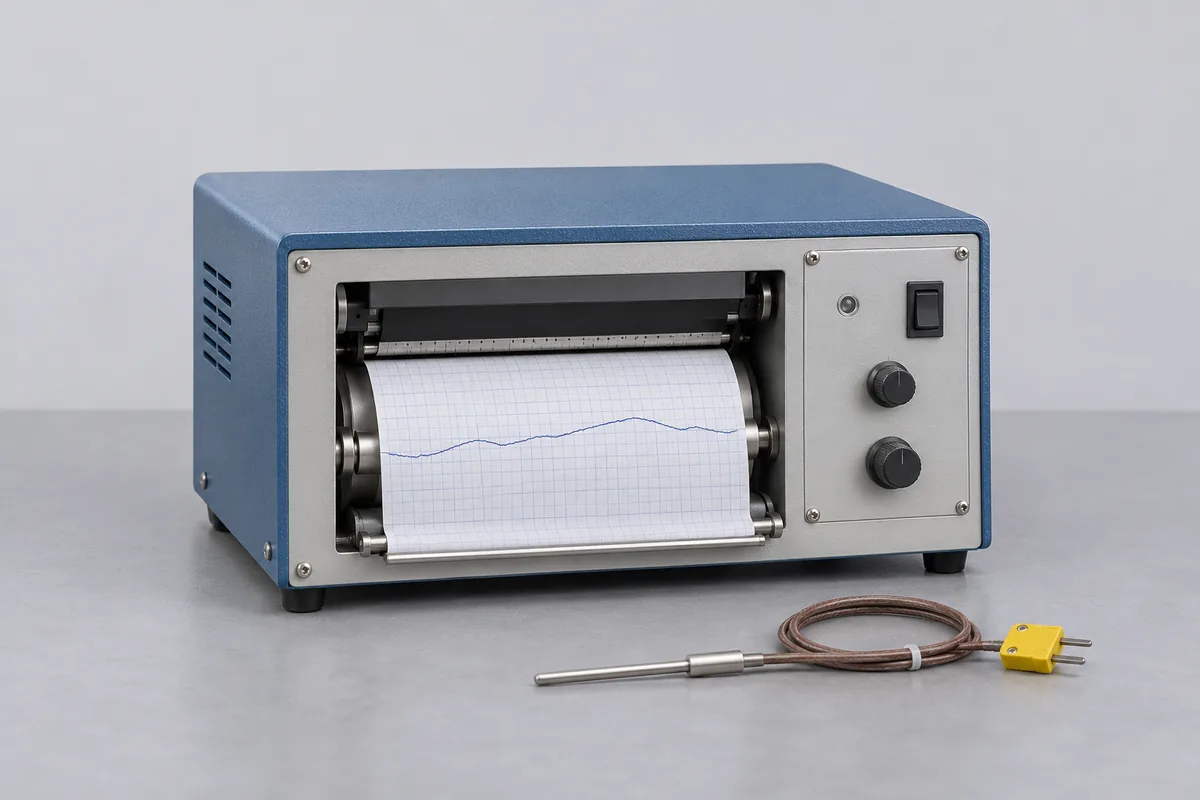
For a paper recorder, give the chart reference, printed scale, pen or channel identity and chart-speed setting. Say whether the work needs a comparison of the displayed value, recorded trace or time axis. Send an unused chart or its specification when the paper type forms part of the request.
For a memory recorder, include the logging interval, scaling and export format used by your team. Keep any existing result that prompted the enquiry. For a recorder with alarm or retransmission outputs, list those functions separately; they are not automatically covered by an input-channel result. RTS will review the input functions and required recording checks before agreeing a method and quotation.
Keep the recorder job separate from the chamber study
Calibrating a recorder does not map the storage space it monitors. If both tasks are due, identify the recorder on the instrument list and describe the chamber study separately. Confirm which leads, modules and chart supplies travel with the recorder, and who will retain its configuration before removal.