
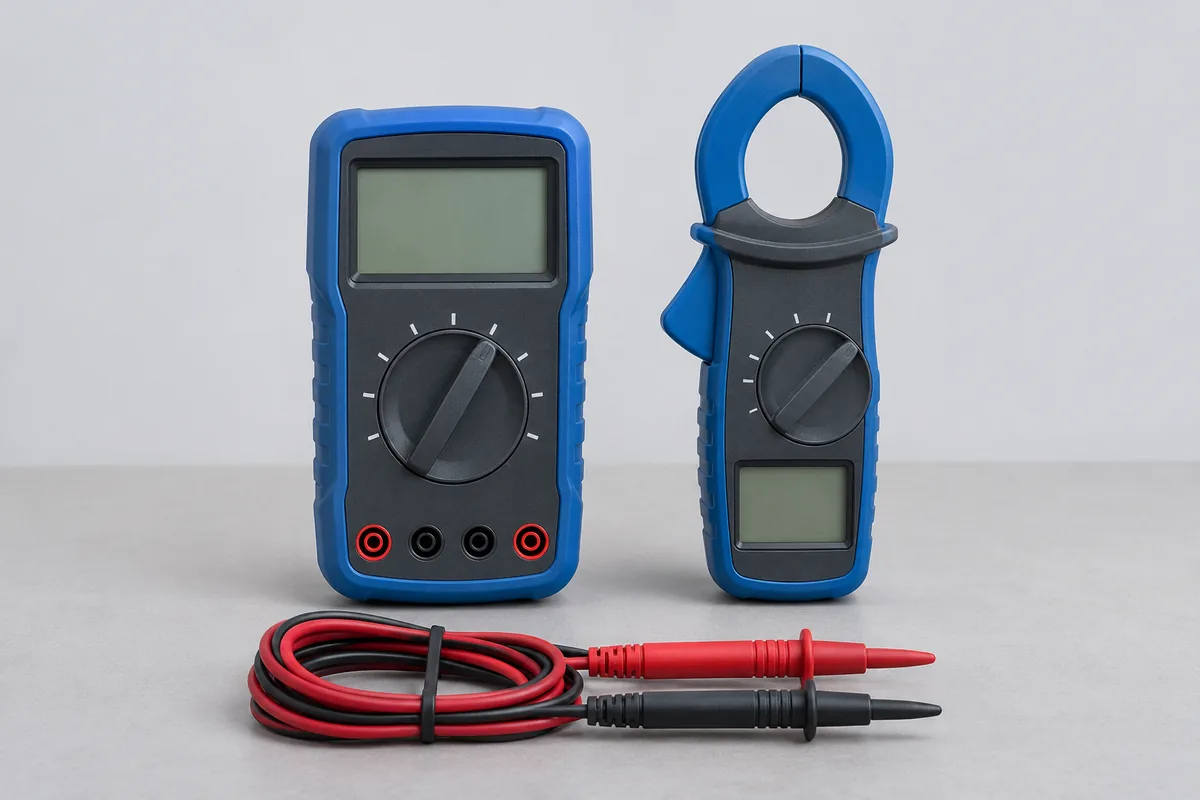
Send the fault history
Provide the exact model and asset number. Give an example of the expected and observed reading if one is already recorded. Mention intermittent behaviour, a recent drop, liquid exposure or an overload. Set aside a damaged meter and use existing observations rather than recreating a fault on a live circuit.
Separate diagnosis, repair approval and calibration
Name the person who can authorise a repair estimate. RTS will review the reported fault and advise whether the model can be assessed and what accessories to send. If a repaired meter needs to return to calibrated service, request the required functions and points as a separate part of the quotation.
When an LCR reading changes with the fixture
For an LCR meter, retain the settings used when the problem was observed. Include test frequency, signal level, displayed parameter and fixture identification. The same component can have different recorded values at different frequencies. Give the existing reference reading or inspection record that made your team suspect a fault.
If staff have already found that a symptom follows one fixture or cable, include that observation and identify the affected part. Ask RTS whether the fixture, adapters and meter should be assessed together. Repair options depend on the model and available parts. Agree who can approve the estimate and which capacitance, inductance or resistance checks are needed after any work, before the meter returns to component inspection.
Handing over a shared meter
Identify whether the fault follows one meter used at several stations. If different plants are sending meters for diagnosis, give each unit its own fault note and approval contact.