
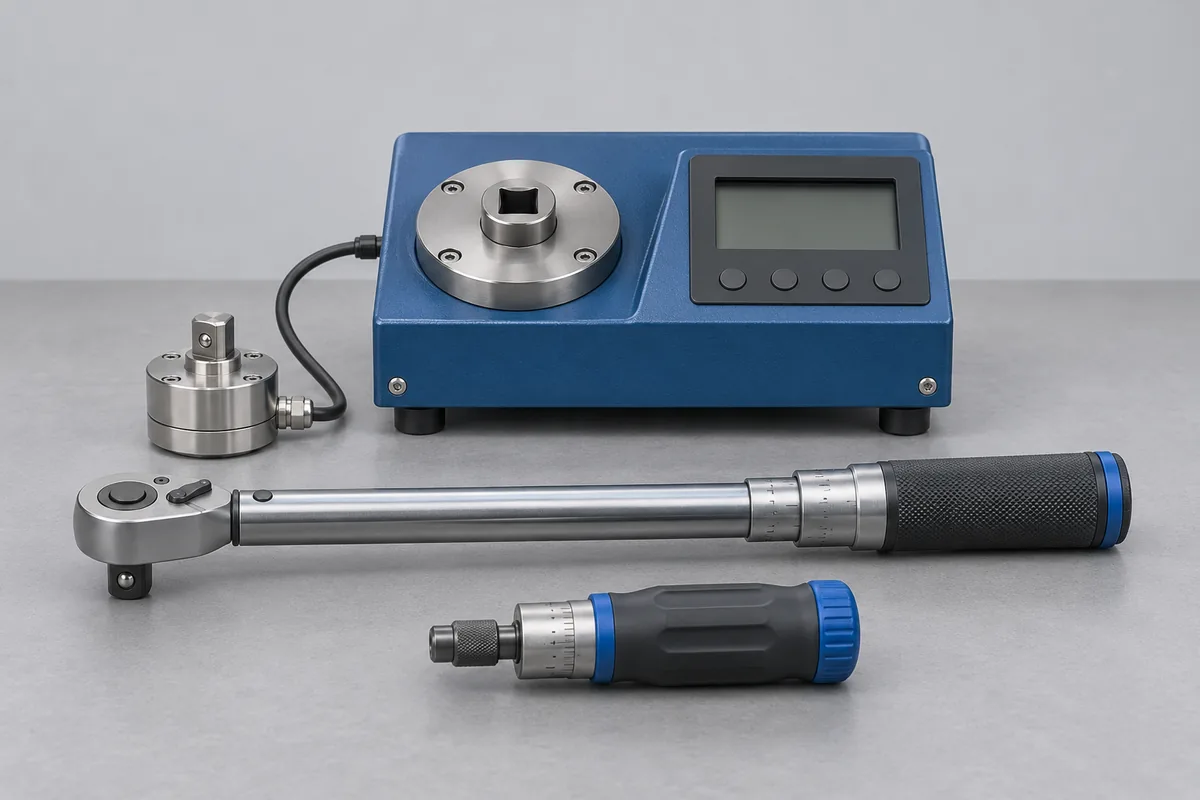
Describe the head and the mechanism
Give the make, model, drive size, torque range and direction of use. Mention an interchangeable head or extension and whether it was fitted when the issue appeared. Tell us about any known drop or previous repair; leave the mechanism assembled for assessment.
Before authorising work
RTS will review the model and advise whether assessment or parts can be arranged. Name the person who can approve an estimate and ask for any required as-received findings. A repaired ratchet still needs the agreed torque checks before the wrench returns to controlled work.
A fault in the head or the release mechanism
The operator's entry “slips under load” may describe the ratchet reversing unexpectedly or the wrench releasing earlier than the normal setting. Preserve the wording from the shift note and identify the direction, fitted head and setting at the time. If someone has already replaced the square drive, include the part number and when the symptom was first seen.
A repaired head does not by itself establish the delivered torque. Where the wrench returns to a controlled assembly station, ask for the post-repair measurements needed for your tool register and who will review them.
Torque screwdriver repair assessment
For a torque screwdriver, describe whether the bit holder is loose, the setting lock moves or the release feels different during normal use. Include the make, model, torque unit, working settings and direction. A preset screwdriver also needs the last authorised setting. Record a known drop or previous adjustment and leave the body assembled so the received condition can be assessed.
RTS will first review whether assessment and suitable parts can be arranged for that model. Name the person who can approve an estimate and specify any initial findings you need recorded. If the tool returns to a controlled assembly station, include the torque points and acceptance limits for the checks after repair. Keep special bit adapters identified with the tool, particularly when they belong to a shared station.
Planning around the tool crib
Identify the station and spare wrench available during assessment. Mark borrowed heads separately if they need to go back to a different store.