
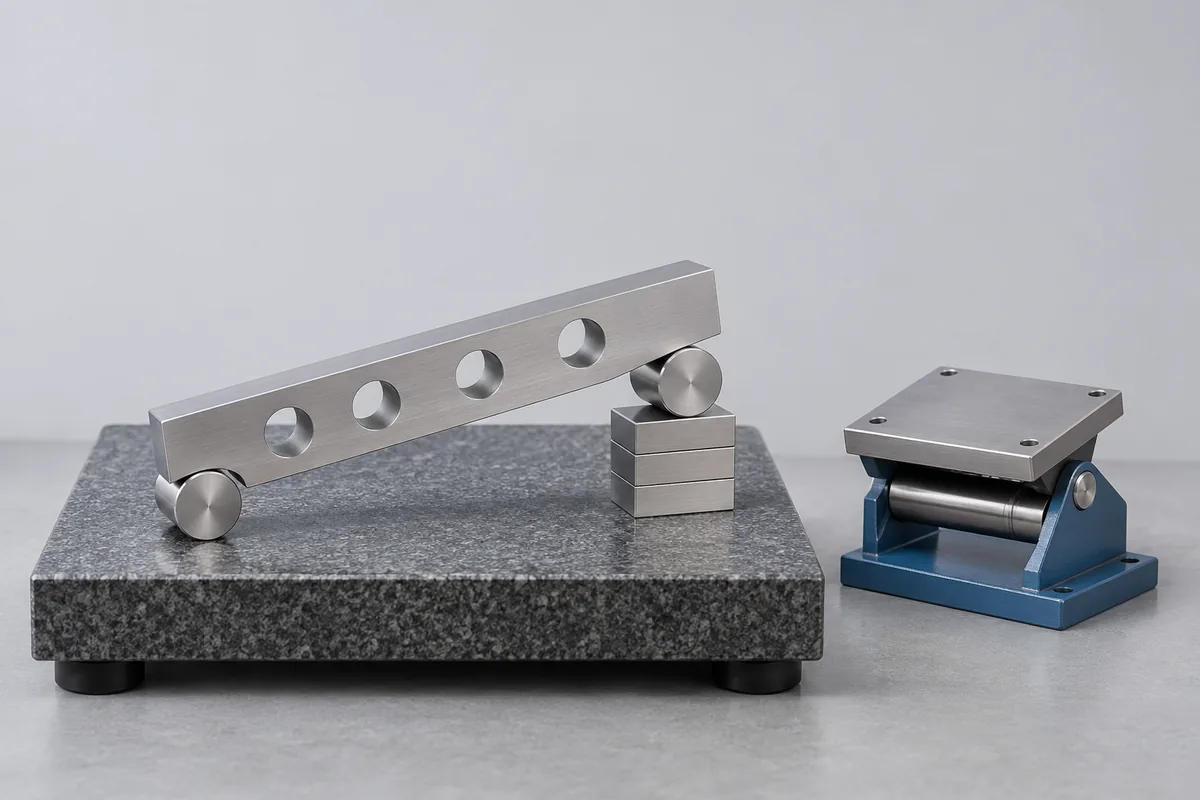
Record what is included in the fixture
For a sine bar, give the marked roller-centre distance, overall size and identifier. For a table, add the platen dimensions and describe its hinge, locking arrangement and any magnetic workholding. A sine centre also needs its centre and support arrangement identified. Photographs from the working and underside faces help explain the assembly.
If the unit belongs to a dedicated checking fixture, send its drawing and revision. Mark the surfaces that contact the workpiece and the position where the height stack is placed. List detachable rollers, stops or supports separately so the review covers the arrangement you intend to use after calibration.
Specify geometry or the assembled angle
A request may concern roller spacing, the relationship of the working face to the supports, or the angle produced by an assembled setup. State each required result. If your work instruction uses particular angles, provide those values and identify the blocks or other height references used to establish them.
Gauge blocks carry their own identification and calibration results. List blocks requiring calibration as separate items rather than assuming that sending them with the table includes that work. Where the toolroom applies measured corrections to calculate the setup, keep the relevant report references with the enquiry. RTS can review the requested geometry, uncertainty and reporting before agreeing how the work should be arranged.
Pack the precision surfaces and mechanisms
Give the table's weight and dimensions before planning dispatch. Identify the manufacturer's transit locks and protect the rollers from loose clamps or workholding parts. Record a stiff hinge or damaged support face in the condition note. Include the return department and the fixture deadline so the assembly can be reconciled before it goes back into use.