
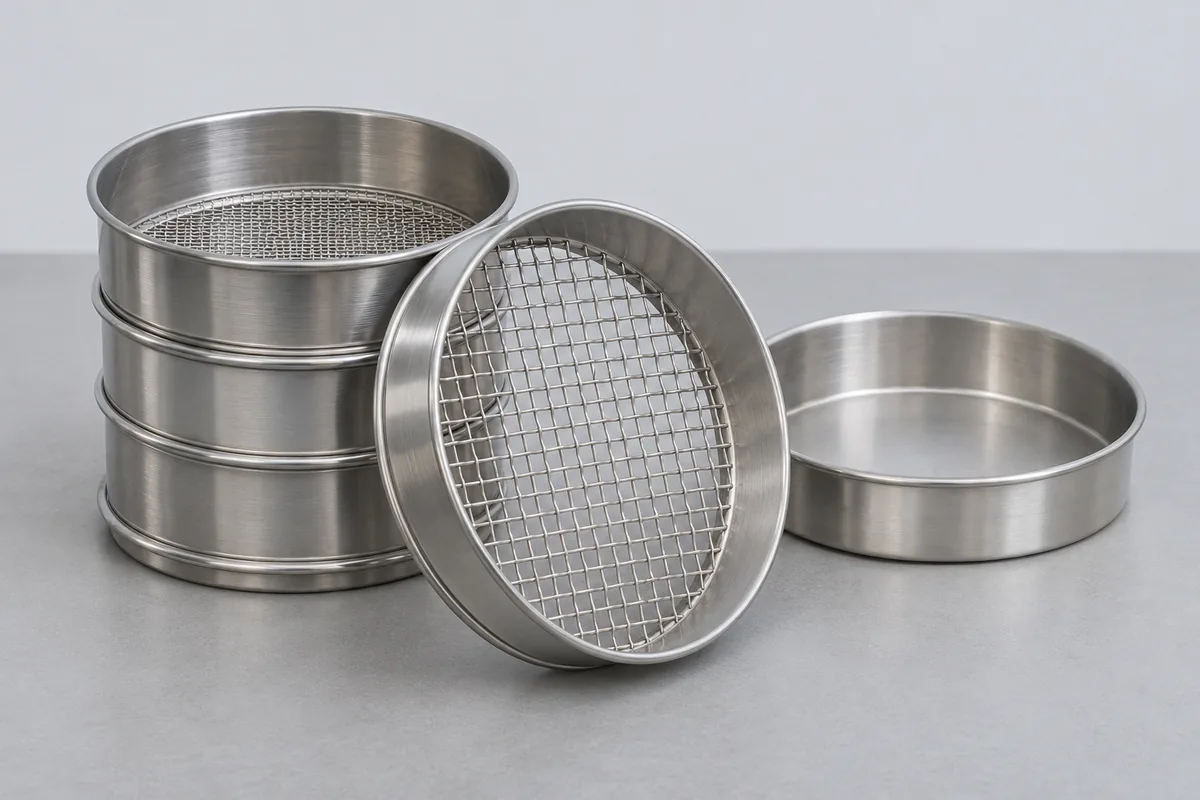
Make an inventory before separating the stack
Record the markings on each frame, its diameter and the nominal opening with its unit. A 200 mm frame can hold cloth with a 250 µm opening. Those two dimensions belong in different columns. Identify wire cloth, a round-hole plate or a square-hole plate and include the standard and edition shown in your procedure or purchase order.
If the cloth was replaced, give the replacement date or identifier you have. A frame may still carry a label from the previous cloth. Note any loose edge, visible distortion or split wire and where it lies. Photographs can help RTS decide what inspection is practical before you send the set.
Agree what a sieve result must show
A buyer may need measured openings, wire diameter, a statement against the specified tolerances, or a combination of these. The sampling requirement affects both the amount of work and how to interpret the result. Ask RTS to confirm the aperture sizes, measuring method and sampling pattern covered by the quotation. For a conformity statement, identify the acceptance rule used by your quality team.
Keep the frame markings legible on return
A stores team releasing several sieves at IMT Bawal can number the cases and list the frame IDs in each. Protect the mesh faces from contact with loose accessories in transit. If a lid or pan travels with the stack, identify it as an accessory so the received count makes sense.