
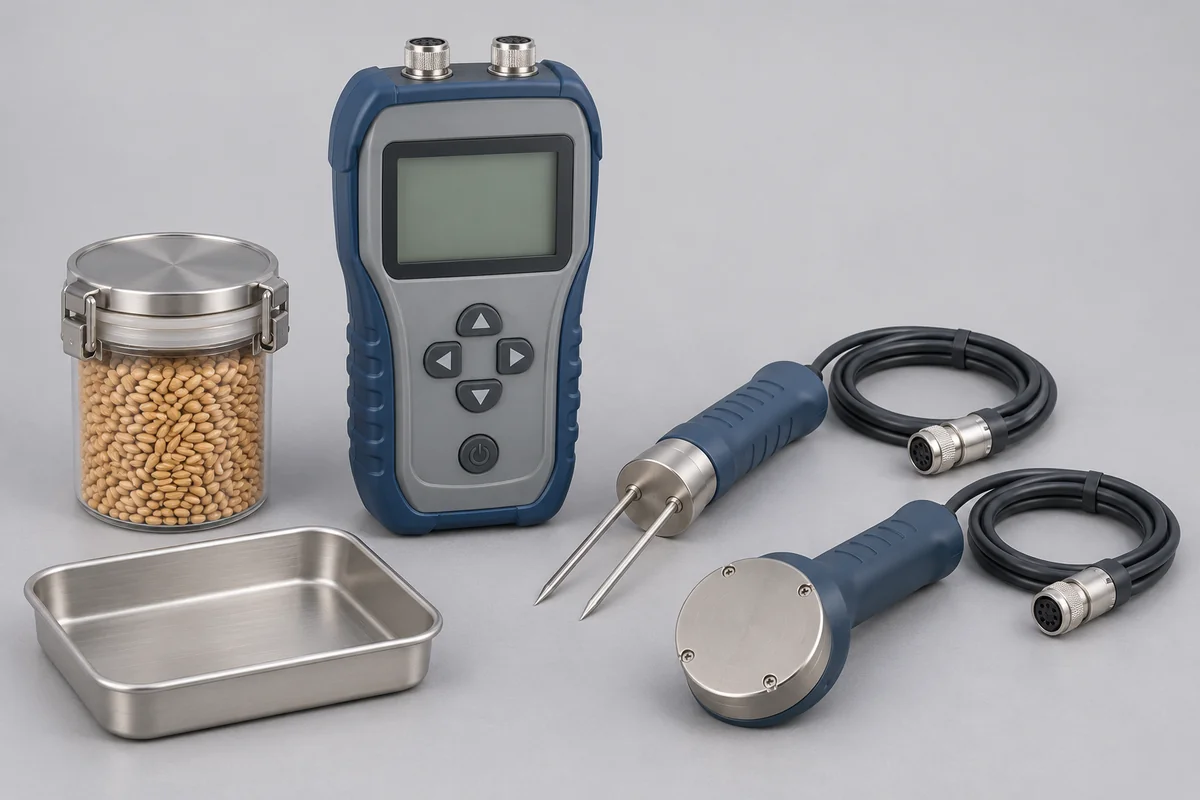
Moisture balance weighing and heating
For a moisture balance, list the weighing capacity, readability and heating programme used for the sample. Give the drying temperature and endpoint criterion from the approved method. The weighing function, heating function and complete drying test answer different questions. Ask for each required check separately; an acceptable weight indication does not establish the temperature or the suitability of the sample's drying programme.
Moisture meter material settings
Identify the moisture meter's sensing principle, probe and material setting. A reading from timber, soil, grain or another product may use a different relationship between sensor response and moisture content. Include the reference method and representative material conditions. An electronic check block can test a defined response, but should not automatically be described as a certified moisture value for every material.
Describe the sample preparation
Record how the laboratory takes and prepares a sample before measurement. Include the container, portion size and any delay before testing where the method controls these details. The enquiry should distinguish a check using a reference material from a comparison involving production samples. Do not ship material until RTS confirms whether it is needed and how it should be handled.
Identify the reported percentage
Copy the result name and calculation basis from the procedure. Loss during drying may reflect more than water for some materials, and a product-specific moisture scale may depend on a model or correction. Your method owner should identify the intended result and the acceptance requirement. Keep that requirement alongside the equipment checks rather than treating a common percentage symbol as equivalence.
Confirm the available measurement route
These requests need a configuration-specific review. Published balance or temperature entries must be matched to the actual component and conditions; they do not establish blanket accreditation for moisture content testing. Ask RTS which measurements can be offered, what references are required and which laboratory will issue the result. Any wider method comparison should have its own agreed procedure and reporting responsibility.
Prepare the laboratory handover
Send the instrument model, method revision and previous results with the enquiry. Keep the sample pan holder, temperature accessory and probe identities on the list when they form part of the requested arrangement. For an IMT Rohtak laboratory or another Indian site, include the bench contact and release window. Confirm the accepted work before moving equipment or sending samples.